 PureShapeFocus
Population-Level Composition Trends
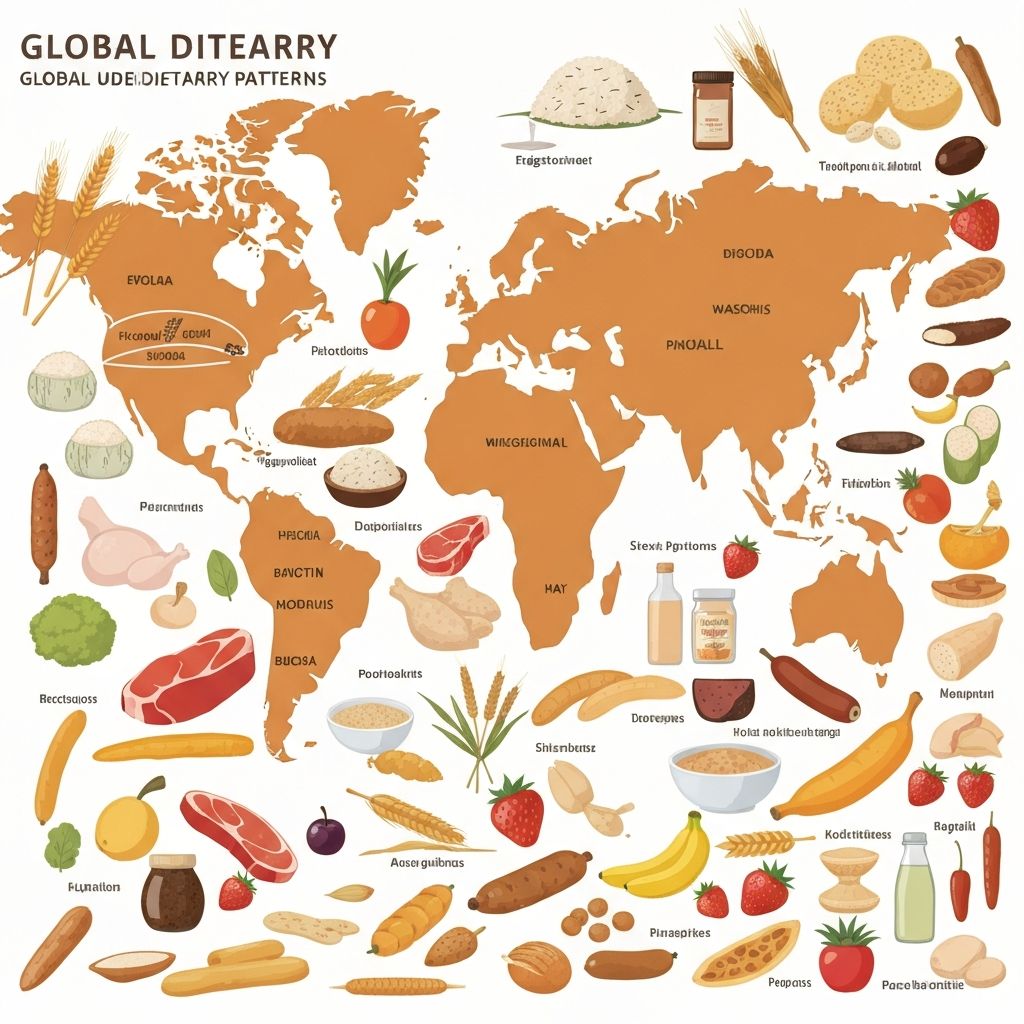
Understanding Population-Scale Patterns
While individual body composition varies based on personal nutrition and activity, populations show consistent patterns in average body composition related to their dietary traditions, activity patterns, and environmental conditions. Understanding these population-level patterns reveals how dietary cultures shape body composition across generations.
The Foundation: Traditional Diets and Body Composition
Different global populations developed traditional dietary patterns based on available local foods and agricultural practices. These traditional diets became deeply embedded in cultural food systems and shaped population-level body composition characteristics across generations.
Populations with predominantly plant-based traditional diets show different average body composition than populations with diets emphasizing animal products. Populations with traditional diets rich in whole grains and legumes show different patterns than populations with processed food-based modern diets. These differences reflect cumulative nutritional effects across generations and modern environments.
Global Population Body Composition Patterns
Mediterranean and Near-Eastern Populations
Populations with traditional Mediterranean diets emphasizing olive oil, whole grains, legumes, vegetables, and moderate fish consumption show characteristic body composition patterns. Traditional Mediterranean populations historically showed relatively lower average body fat percentages compared to modern developed country averages.
However, these populations show rapid composition changes with modernization and dietary Westernization. Younger generations consuming modern processed foods show significantly higher average adiposity than their ancestors following traditional Mediterranean diets, demonstrating the rapid environmental effect on composition.
Asian Populations with Plant-Emphasis Diets
Traditional Asian diets in populations from China, Japan, and Southeast Asia emphasize rice or noodles as staple carbohydrates, vegetables, legumes, and moderate fish consumption. These populations historically showed lower average body fat percentages than modern Western populations.
Traditional Japanese populations, for example, consumed diets high in whole grains, vegetables, and seafood with modest overall caloric intake. This dietary pattern was associated with lower average adiposity compared to post-industrial diets. Again, modernization and dietary change create rapid composition changes independent of genetic change.
African Populations and Traditional Diets
African populations with diverse traditional diets based on grains, legumes, vegetables, and regional protein sources show varied but distinct body composition patterns reflecting their specific environmental adaptations. Pre-modern African populations with active occupational patterns and traditional diets showed different average compositions than modern populations consuming industrialized foods.
American and European Historical Patterns
European populations historically showed variable body composition based on socioeconomic status and agricultural productivity. Higher adiposity was historically associated with wealth, food abundance, and sedentary occupations. Lower socioeconomic populations with limited food access and physically demanding work showed lower average adiposity.
The modern reversal—where lower socioeconomic status correlates with higher adiposity in developed countries—reflects dramatic changes in food access, food quality, and occupational activity patterns rather than genetic changes.
Dietary Pattern Correlations with Body Composition
Whole Food Patterns vs Processed Food Patterns
Populations consuming predominantly whole foods show different average body composition than populations consuming predominantly processed foods. This pattern holds across different geographic regions and ethnic groups. The correlation reflects differences in:
- Nutrient density and metabolic signaling
- Satiety and hunger regulation through whole food fiber and structure
- Micronutrient adequacy supporting efficient metabolism
- Inflammatory burden from processing and additives
Plant-Emphasis vs Animal-Product-Emphasis
Populations with traditional diets emphasizing plant foods show different average compositions than populations emphasizing animal products. Plant-emphasis populations typically show lower average adiposity, though this varies with overall caloric intake and activity level.
However, this pattern is not absolute causation—it reflects the dietary context of whole foods. Modern processed plant-based diets can be as high-adiposity-associated as processed animal-product diets. The pattern reflects whole food plant emphasis, not plant foods per se.
Refined Carbohydrate Introduction and Composition Changes
Historical records document body composition changes following the introduction of refined carbohydrates to populations. Populations transitioning from traditional whole grain diets to refined grain-based diets show rapid increases in average adiposity. This effect is well-documented in multiple populations spanning different genetic backgrounds.
The rapidity of these changes—occurring within one generation—demonstrates that genetic differences between populations are not primary determinants of composition. Environmental factors, particularly dietary changes, override genetic predisposition.
Occupational Activity and Body Composition
Historical populations with occupational activity patterns requiring substantial daily energy expenditure showed lower average adiposity than sedentary populations with equivalent caloric intake. Agricultural work, manual labor, and occupational activity patterns historically determined substantial differences in average population body composition.
Modern populations with sedentary occupations show higher average adiposity than occupational activity counterparts independent of dietary differences. The transition from agricultural and manual labor to sedentary office occupations represents a massive decrease in average population activity, contributing to composition changes across all populations.
Rapid Population Composition Changes with Environment
Migration Studies
Research on migrant populations provides powerful evidence for environmental effects on composition. Immigrant populations adopting new dietary patterns and activity patterns show rapid composition changes—often increasing within one generation despite carrying the same genetic background as non-migrant relatives.
This demonstrates that genetic differences between populations cannot explain the composition differences observed between populations, since the same genetic background produces different results in different environments.
Generation-Scale Changes
Within countries experiencing rapid modernization and dietary industrialization, population-level composition changes occur across generations. Younger generations in modernizing countries show increased average adiposity compared to older generations, changes too rapid to reflect genetic evolution but consistent with environmental dietary and activity changes.
Rapid Reversal with Dietary Change
Populations reducing processed food consumption and increasing activity show rapid composition improvements. When populations return to traditional dietary patterns and activity levels, composition changes occur within months to a few years, demonstrating the powerful environmental effect on composition independent of genetic change.
What Population Patterns Reveal
Genetic vs Environmental Contribution
Population patterns reveal that while genetics contribute to body composition potential, environmental factors—particularly nutrition and activity—create the dominant effects on actual body composition. Different populations with different genetic backgrounds show similar composition patterns when exposed to similar environments. The same genetic background produces different composition in different environments.
This reveals that genetic differences between populations cannot be the primary explanation for composition differences. Instead, environmental differences—dietary patterns, activity patterns, occupational structure, modern food industrialization—drive population composition differences.
Population Diversity is Normal
The diversity of body composition characteristics across human populations is normal and expected. Different populations adapted to different ancestral environments, developed different agricultural and food systems, and now face different modern environmental conditions. This diversity is a feature of human biology, not a defect.
Environmental Malleability of Composition
Population patterns demonstrate that body composition is remarkably malleable in response to environmental change. Populations can change their average composition characteristics within generations through dietary and activity changes. This reveals that individuals within populations also have potential to change their composition through environmental modification, though the ease and extent varies with genetic predisposition.
Modern Challenges and Traditional Wisdom
Modern Food Environment Effects
The modern industrial food environment represents a dramatic departure from ancestral human diets and traditional population diets. Processed foods, refined grains, added sugars, and engineered foods create metabolic signals different from those for which human metabolism evolved.
Populations worldwide show increasing adiposity when exposed to modern industrialized food systems, regardless of genetic background. This pattern across all populations demonstrates the powerful effect of modern food environment on population body composition.
Traditional Knowledge and Modern Science Convergence
Modern nutritional science increasingly validates insights from traditional dietary patterns. Populations maintaining traditional whole-food-based diets show health outcomes and body composition patterns that modern science now recognizes as beneficial. Traditional dietary wisdom, developed through long experience with available foods, often aligns with modern nutritional science understanding of metabolic effects and tissue health.
Summary: Population as Window Into Composition Science
Population-level body composition patterns reveal fundamental principles of nutritional science. They demonstrate that dietary quality, food processing level, overall dietary patterns, and activity levels create powerful population-scale composition effects. They reveal that genetic differences between populations are insufficient to explain composition differences—environment dominates.
They demonstrate the malleability of human body composition in response to environmental changes. And they reveal that traditional dietary patterns, developed through generations of cultural food wisdom, often support body composition patterns consistent with modern nutritional science understanding of metabolic health.
Continue Learning
Explore our comprehensive collection of body composition and nutritional science articles.
Return to Blog